Marketing in the Attention Economy
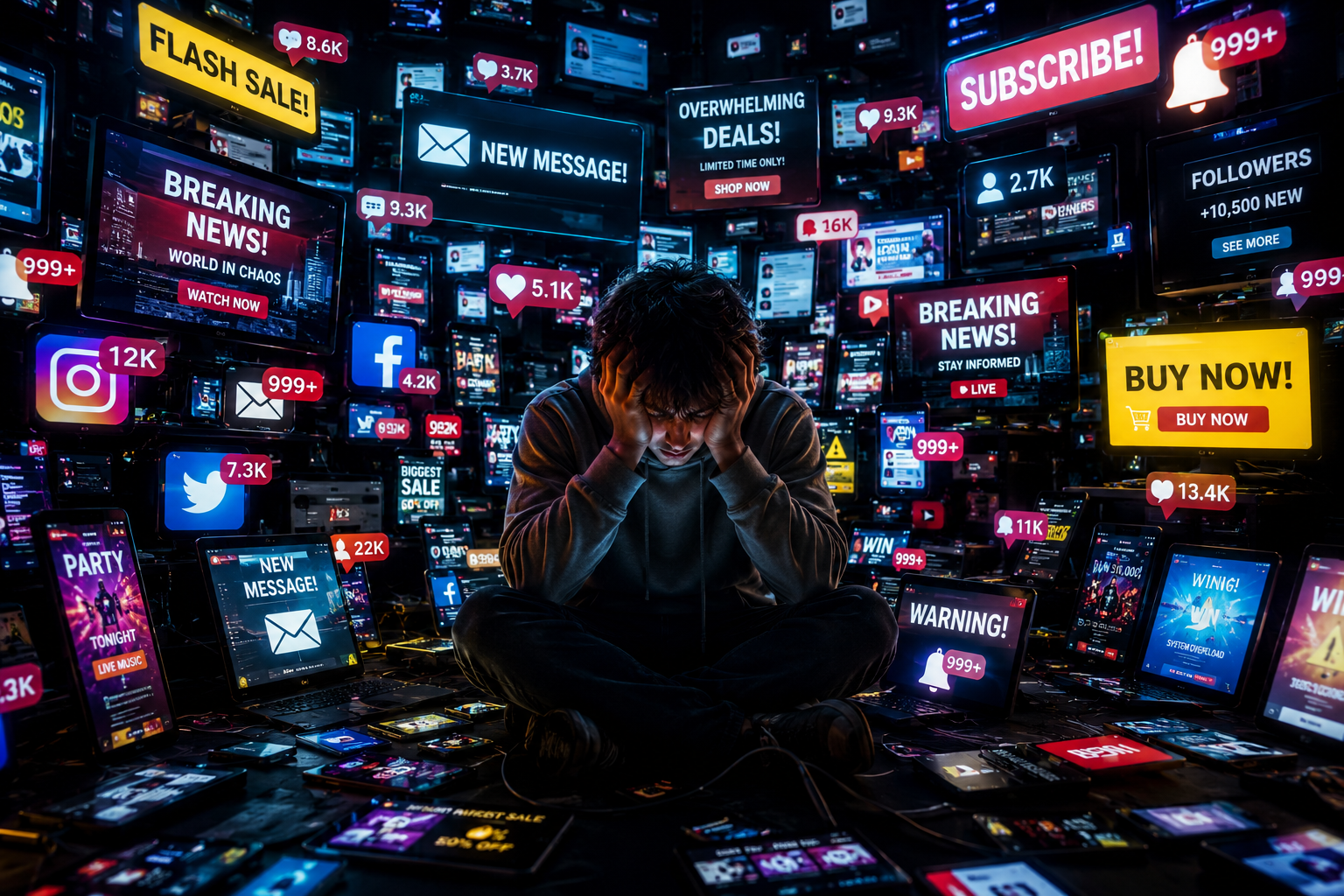
Every day, your potential customers scroll past thousands of marketing messages before breakfast. Social media feeds, email inboxes, search results, podcast ads, streaming pre-rolls all of it competing for one finite resource: attention.
If your business is online but struggling to gain traction, this is likely why. Visibility alone no longer drives growth. Relevance does.
This is the attention economy, and understanding it is now a baseline requirement for any business owner serious about digital marketing strategy.
The Attention Economy, Defined
The attention economy is a framework that treats human attention as a scarce, tradable resource in the digital marketplace. As the volume of online content increases, the value of each person’s attention rises with it.
For entrepreneurs and SME owners, the implication is straightforward: you are not just competing with direct competitors. You are competing with every piece of content your audience encounters in a given day.
Attention is currency. Spending money on ads, building a polished website, or maintaining social profiles means very little if your messaging cannot stop someone mid-scroll.
You Have Seconds, Not Minutes
Today’s consumer behaviour is shaped by speed. Business owners often have a three-to-five-second window to communicate three things:
- Who you are.
- Why you matter
- Why someone should act now.
Long-winded corporate copy, generic taglines, and overly produced advertising frequently underperform against content that feels authentic, fast, and human. People engage with businesses that are relatable, useful, or emotionally relevant, not businesses that simply look expensive.
The brands gaining real traction are creating content people choose to consume, not content designed only to sell.
From Interruption to Value: The Strategic Shift
Traditional advertising worked by interrupting people. Modern content marketing works by attracting them.
The most effective businesses have shifted their marketing investment toward:
- Educational content that solves real problems
- Behind-the-scenes storytelling that builds familiarity
- Thought leadership that earns industry credibility
- Community engagement that turns audiences into advocates
- Short-form video and podcasts that meet audiences where they already spend time
This is why formats like TikTok marketing, LinkedIn content strategy, YouTube tutorials, and business podcasting are outperforming traditional campaigns. They build trust gradually instead of forcing an immediate sale.
What Social Media Trained Your Audience to Expect
Platforms like TikTok, Instagram, LinkedIn, and YouTube have fundamentally reshaped how people consume information. Your audience now expects:
- Immediate value from every interaction
- Visually engaging, scannable content
- Authentic, unscripted communication
- Concise delivery — short-form over long-form
This creates a significant advantage for business owners who learn to communicate clearly and quickly. It creates an equally significant disadvantage for those relying on outdated, text-heavy, corporate-style messaging.
Attention Without Trust Is a Vanity Metric
Going viral means nothing if it does not convert to trust, credibility, or revenue.
Many businesses chase vanity metrics — views, likes, follower counts — without building the systems that turn attention into action. Sustainable business growth requires four elements working together:
- Attention — being seen by the right audience
- Credibility — being believed once seen
- Consistency — staying visible over time
- Conversion strategy — guiding people from awareness to purchase
This is where most businesses leave money on the table. They invest in visibility but neglect the customer journeyafter the first click. A strong website, clear messaging, genuine social proof, and reliable follow-up systems matter just as much as the content that attracted the visitor.
Why Human-Centred Marketing Wins
Consumers are growing increasingly sceptical of polished corporate messaging and heavily automated content. The businesses earning the deepest engagement are the ones showing real people, real processes, and real expertise.
Human-centred marketing prioritises:
- Transparent communication over manufactured perfection
- Education over persuasion
- Personality and culture over generic brand language
- Real customer stories over stock testimonials
This is especially powerful for small and medium-sized businesses. SMEs hold a natural advantage in the attention economy because they can communicate more personally and authentically than large corporations ever will.
AI, Content Saturation, and the Authenticity Premium
Artificial intelligence is accelerating content production across every industry. Businesses can now generate articles, graphics, social posts, and campaign copy faster and cheaper than ever before.
But more content does not mean better results. As AI-generated content floods the market, audiences are becoming better at filtering out generic material. The businesses that will stand out are those combining AI efficiency with genuine human expertise, original insight, and distinctive personality.
The future of marketing does not belong to the businesses producing the most content. It belongs to those producing the most meaningful content.
The Bottom Line for Business Owners
Marketing in the attention economy is not about being the loudest voice in the room. It is about becoming worth paying attention to.
The businesses winning today share five traits:
They understand their audience deeply.
They communicate with clarity and speed.
They provide consistent value before asking for a sale.
They build trust through authenticity, not volume.
They create experiences that feel human, not corporate.
New Lead - Extreme Marketing

Web & App Development Lead
Mark combines strong technical expertise with a sharp eye for design. With more than five years of experience in website and application development, he has led a wide range of successful digital projects—turning ideas into websites and applications that look great, work smoothly, and support real business goals.